

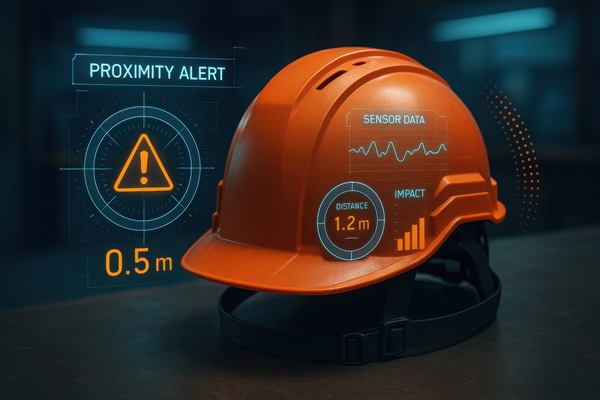
Imagine your helmet vibrating to warn you about rising carbon monoxide levels before you sense danger. Or your wristband alerting your supervisor to signs of heat exhaustion before you feel dizzy. Connected safety devices are quietly transforming how employers identify hazards, protect workers, and respond to emergencies. These tips highlight how this technology can help prevent injuries and illnesses — and how to use it effectively in your workplace.
1 Identify hazards in real time — not after an accident.
Smart helmets, badges, and sensors detect gas levels, extreme heat, chemical exposure, and low oxygen — often before workers notice anything wrong. Some wearables can also warn workers when they get too close to restricted zones or moving equipment.
2 Stay connected without losing focus.
Smart glasses and hands-free communication tools let workers receive instructions or document hazards without stopping work or removing protective gear. Workers in construction, utilities, and emergency response gain a clear advantage from these tools.
3 Monitor worker health before a small warning sign becomes a crisis.
Wearable devices can track heart rate, body temperature, fatigue, and repetitive motion — alerting workers and supervisors to early signs of heat illness or overexertion before symptoms appear. During hot weather or heavy physical work, catching these signs early can prevent serious harm.
4 Respond faster when every second counts.
If a worker falls, stops moving, or activates a panic button, connected devices send automatic alerts and share the worker’s exact location. For lone or remote workers, that faster response time can mean the difference between a close call and a tragedy.
5 Prevent equipment failures before an injury results.
Sensors on forklifts, conveyors, and heavy machinery monitor vibration, temperature, and performance. When something goes wrong, supervisors receive an alert so they can fix the problem before equipment fails and someone gets hurt.
6 Improve compliance through automatic logging and documentation.
Some systems track inspections, store training records, and flag where workers may need additional instruction — helping employers strengthen documentation and meet compliance requirements.
7 Use technology wisely and with a strong safety foundation.
Employers should clearly explain what they track — such as location, movement, or health data — and why. Workers who understand the purpose behind safety monitoring are more likely to trust the system and use the devices correctly.
Connected devices work best as an early-warning layer that strengthens existing safety programs — not as a substitute for hazard assessments, machine guarding, and proper training. If you’re not sure where to start, help is available.
Need help strengthening your safety program or complying with OSHA standards? Contact the Occupational Safety and Health Consultation Program (OSHCON) for free, confidential, on-site help to identify and eliminate job hazards. Email OSHCON@tdi.texas.gov, call 800-252-7031, or fill out the OSHCON online request form.